www.hillmanweb.com/uk/guardian.html
A Musical Odyssey :: The UK Connection
Presents
On the Trail of Guardian Studio's
Terry Gavaghan

A Record of Correspondence Between The Sleuths:
Graeme Robinson ~ Darlington, UK
www.myspace.com/circulationsound
Bill Hillman ~ Brandon, MB, Canada
www.hillmanweb.com
February 15, 2010
Hi Bill,
I've enjoyed reading your diary entries about recording at Guardian Studios, Pity Me, UK. I am currently researching information about Terry Gavaghan for a biography article and I'm particularly interested in finding a good picture of Terry at his studio. I recorded at Guardian with several bands in 1980-82 while doing session drumming work and found Terry quite a character and his studio a revelation. His was the only 24-track facility in the region at the time, it also had a quintessentially 1970s sound, with no ambience, but the gravity and compression of analogue 2 inch tape on his Studer machines.

In reading mentions of Terry online, I was sad to see a reference to 'the late Terry Gavaghan' in an interview with Tim Jones of the band Neon:

'Returning to the subject of Treatment Room for a moment, after I had left the band they went on to release an excellent single in 1980 called "Awayday" with a B side called "Shapes" on Plug Records, based in Gateshead, Tyne & Wear. It was engineered by the late Terry Gavaghan. It was Terry in fact that engineered Neon's first single on Edinburgh's Sensible record label. I was also involved in other projects with Terry at his wonderful Guardian Studios in the little ex mining town called Pity Me in County Durham.
 Terry was a well known studio engineer in the north east of England, a bit of a local legend. He had worked on so many of the definitive early punk/new wave releases that came out of the north east in the 1970s and 1980s. (Penetration & Punishment Of Luxury to name but two). He also did a lot of work for local television. He had an eight track mobile studio for a while too that meant bands could choose to record in their own environment as an option and it did the job of what would now be called Home Recording years before high quality domestic recording equipment was widely available. I remember both Terry and his assistant Keith as excellent people to work with.'
http://aural-innovations.com/stonepremonitions/history/interviews2.html

I found a newer address for Guardian Music in Pity Me, as listed in 2004:

Guardian Music Company
Woodcroft Farm House
Abbey Road
Pity Me
Durham County
Durham DH1 5DG

I then found a planning permission notice for this address in 2005, under new ownership. This would seem to indicate that Terry was gone by 2005.

I last saw Terry in Stockton on Tees, circa 1989, at Teesbeat Studios, where he was producing a session and looked quite drawn and had lost some weight. There seemed to be an indication of something amiss, simply by his being somewhere other than his own studio, though perhaps this was sold off by then. The output of Guardian Studios appears to end around 1985, going by online references to releases, sleeve notes, etc.

Your sessions, as described in your journal, capture the point at which Terry's studio was on the way up, pre-1980s, before he produced several successful singles by The Toy Dolls, Prefab Sprout, Incubus, et al. I'm particularly touched by the detail you included, such as the studio interruptions, the ghost story, the claims about studio instruments, Terry's work with The Carpenters, which are all familiar to me and anyone else who recorded there.

Terry mentioned his sound work for TV at the time, and said he used the name Terry Cavagin for this. As with all of Terry's claims, one could never be sure if they were an elaborate extension of his impish sense of humour, or if they were true. There are lots of references to a Terry Cavagin as a dubbing mixer for television programmes in the late 1970s and '80s, including a BAFTA Award in 1983 for the sound in 'Harry's Game' and credits on 'Follyfoot', 'Flambards' etc, which I remember him mentioning. These credits cease in 1989.

I read that you were looking for a scanning facility for your slides from the era. Hopefully you will find one at some stage. I have a USB negative/transparency scanner which I found in a photo shop a few years ago, which was not too expensive. I hope you can find a picture of Terry at his peak which we might include in his tribute.

Once again thank you for for sharing your music history, it's much appreciated.
 

Kind regards,
Graeme Robinson
Darlington, UK
www.myspace.com/circulationsound

On 15 Feb 2010, at 20:13, Bill and Sue-On Hillman wrote:
Bill down the street from Guardian Studios in Pity MeMany thanks for the great Gavaghan info, Graeme. I've finally purchased a slide/negative scanner which I haven't used yet . . . but I'll be sure to delve into the old UK slides to see if I have something on Terry that would be suitable. Mick Sandbrook of the band "Raised on Rusks" who was the bass player on our session might have some more info

Do you know if any other musicians experienced the appearance of the "ghost" in the studio?

We drove by the old Pity Me location two years ago returning from the Phil Collins' Tarzan Musical opening in Holland. . . brought back some good memories.

Bill Hillman
Brandon, Manitoba, Canada
http://www.hillmanweb.com


A Few Memories of the Recording Sessions at 
Terry Gavaghan's Guardian Studios ~ 1979
From The Stories Behind the Songs
Scrapbook of the Third Tour of England
Album No. 9: On Tour in England
Journal Excerpts
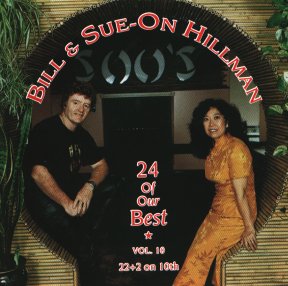

The recording of the song, Lady Luck, was the culmination of a joint international project. We spent a week in Durham's Guardian Studios with Desperado, a Middlesbrough-based English show band. After pooling our efforts on the backing tracks, we each did our own version of the final vocals and mix. The result was that they had songs to release as singles and we had enough originals and covers for a complete album. I felt that we needed synth arrangements and since our regular keyboard player, Kevin Pahl, couldn't accompany us on this third tour, I hired one of the musicians whom we had met in the local clubs. He did a fantastic job for us and we really weren't too surprised when we learned five months later that he had joined Mark Knopler's Dire Straits as a regular. 

Desperado was comprised of Alun Edwards (vocals, congas, percussion), Mick Sandbrook (vocals, bass), John Whittingham (vocals, guitar), Colin Bradley (vocals, guitar, keyboards), Paul Duckers (drums) - all from the Middlesbrough, County Cleveland area. Paul Rodgers of Bad Company had come out of this group a few years before. 

The Hillmans with Terry at the Guardian Board
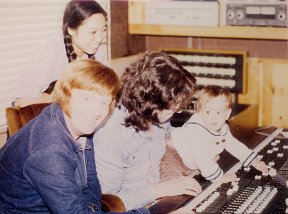
The Hillmans work the board with Terry at Guardian StudiosIt was while recording the vocal tracks for this song that we were drawn into the realm of the supernatural. The hour was late -- around midnight at Guardian Studios, Pity Me -- the bed tracks were in the can, and we had just removed the drums from the isolation cubicle which was to double as my vocal booth. Sue-On had gone across the street to make a telephone call while Terry, Alan and Mick sat staring at me through the control room glass, waiting for me to sing along with the backing tracks of Lady Luck. Part way into the song there was a brilliant flash of light around me and someone turned off the 24-track recorder. Wondering what the problem was, I looked inquisitively toward the guys at the console. They had strange looks on  their faces and I heard Terry's voice over the cans, directing me to come in. 

My first thought was that something had happened to destroy the master tape. Terry phoned his neighbour friend while I tried to get Mick to tell me what had happened. The neighbour rushed in saying, "She's back!???" All three in the control room had seen a brilliant light radiating from a negative image of a small person standing close to me!

Terry explained that years ago a young girl who lived here in this row house, the one that he had converted into his studio, had run out into the path of a lorry and had been struck down. They carried her into this room and had laid her dying body on a sofa in the same area as the vocal booth. The ghostly image of this girl has appeared frequently, usually in conjunction with some calamity - in this case her visit must have been brought about by my singing. 

Stories about the 'ghost' (Guardian Angel?) abound and her picture is displayed in the pub down the street. I suggested to Terry that he should include the story in his advertising, but he seemed very reluctant -- in fact, he was afraid it would drive away business. I saw no ghost but I did see a brilliant light... and the shocked and frightened looks on my cohorts' faces. 

~ Bill Hillman
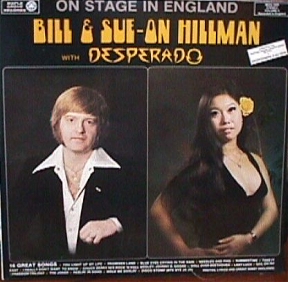
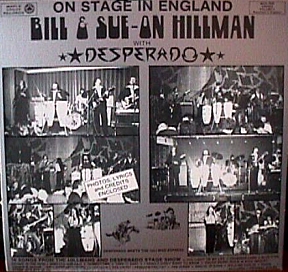
Volume 9: On Stage In EnglandVolume 9: On Stage In England with Desperado
Many thanks for your swift trans-atlantic response. I have attached my article, which I'm still drafting and is without a bibiography at present. Please feel free to reference, cut and paste away, with my warmest blessings.

I indeed recall more than one spooky bright light related encounter in the studio, accompanied by much late-night atmospheric story telling, including the tale of the inexplicable re-appearance of the "Little Lake" or 'Petit Meer', from which Pity Me had taken its name. All fabulous stuff, and Terry was indeed a memorable character and I remember him fondly. Not realising he had passed, or knowing when, I can only say sometime between 1990 and 2005, is regrettable to say the least.

I'm still looking for the key birth/death dates and more early life information. Some of Terry's claims, both to fame and the provenance of his studio instruments, remain unclear but are tantalisingly possible. I can't find any firm reference to him playing lead guitar for The Carpenters. Tony Peluso is famously, and reliably, credited with the iconic Goodbye To Love solo, but then, I seem to remember Terry actually telling me this, when myself and a youthful band-mate inquisitively pressed him about it, circa 1982.

Glad to hear you have photo slide scanner in place. I bet you have the definitive photo document in your possession. I notice in a small pic of you and Sue-On at the console with Terry, that the Studer Machine was on the opposite side of the control room to where it later lived, in an open airing cupboard type of enclosure.

Cheers, aye, aha..
Graeme

A Draft of Graeme's Article on Terry Gavaghan
Terry Gavaghan (aka Terry Cavagin) [DOB/D unknown] was a northeast UK-based music producer, sound engineer, musician and music publisher. In the mid to late 1970s, Terry built an independent 24-track recording studio at Pity Me, Durham, UK, which was the first and perhaps the only professional music recording facility in the north east of England at that time.

The studio was built inside a victorian terraced house, located at Front Street, Pity Me, a former County Durham mining village. A key feature of Guardian Studios' design was that Terry had also bought the end-terrace, next door to the studio house, and later the third house, on the other side of the studio, enabling additional sound insulation from residential neighbours.

The studio was small, occupying just the two ground-floor rooms of the centre terraced house. The live room had a compact drum booth and upright piano with room for up to four musicians and minimal backline. The control room was smaller, containing a Studer mixing console and 24-track recording machine, Terry's studio engineer's chair and an uncomfortable wooden bench fixed to the back wall, for clients' 'listening-back'. A rear extension contained a small kitchen and toilet facilities, and an access door opening directly into the back lane outside, where most loading-in was done by visiting bands.

Terry and his studio became a magnet for bands looking to record both original and cover recordings, though his studio time was quite expensive, which in the absence of any competition locally, arguably created an aspirational demand to record, amongst the dedicated music community in the region, and some international visitors.

The output of Terry's studio between 1978 and 1985 included some key debut singles, EPs and albums from up-and coming north east bands Prefab Sprout, The Toy Dolls, Incubus, Neon and many more aspiring recording artists, from folk to rock and heavy metal. Terry's own independent label, Guardian Records 'n' Tapes, contributed to the NWOBHM (New Wave of British Heavy Metal) movement, with numerous label releases (and licensed releases through Roadrunner Records), from 1979 to 1984. Guardian Music, a related music publishing operation, would occasionally acquire the rights to songs recorded in the studio, in which Terry took a special interest, perhaps in exchange for reduced recording costs to the artists or his input as an arranger of the songs.

Terry's many claims to fame and his stories, anecdotes and sayings have passed into local music folklore. Lesser amongst these claims are references Terry made to his work in television, using the name Terry Cavagin. Indeed there are numerous credits attributed to this name, as a dubbing mixer in the 1970s and 80s, including a BAFTA Award in 1983 for sound for the 'Harry's Game' TV series and credits on 'Follyfoot', 'Flambards' , 'The Beiderbeck Affair' and other UK television productions, until 1989, when these credits cease. Cavagin is also credited as a co-author of The Sound Production Handbook, [Don Atkinson, John Overton, Terry Cavagin. (Blueprint -1995)

Other claims, often repeated to and by studio clients, are that the battered remains of a Premier Resonator series drum kit, which was the 'house kit', had previously belonged to Keith Moon of The Who. The studio's upright piano had allegedly been used by Elton John on his 1972 Honky Chateau album, and later purchased by Terry from the studio at Château D'Hierouville, France. Terry also told many stories of his days as a session guitarist, most notably with The Carpenters, including lead guitar parts on notable tracks. Other stories propagated by Gavaghan include a lightning visit by an on-tour Madness, recording the basic tracks for their hit version of It Must Be Love (1981), featuring the 'Elton' piano and charting at number 6 in the UK singles chart on its re-release in 1995.

Further tales, which became staples of late night recording sessions include the 'studio ghost', which would manifest itself as bright flashes of light in the drum booth during vocal takes, or odd noises on tape, resulting in diversionary comments of "Did you see that?" from Terry, and extended breaks from recording as the tale would unfold. Terry's other legendary antics included setting an early Eventide Harmonizer digital delay unit to a high-pitched setting in the control room, while the unsuspecting vocalist would hear a regular foldback send of their mic in the headphones, producing much hilarity amongst bandmates, unused to technical trickery on such a grand scale.

Terry would also make legendary disappearances from his own sessions, leaving bands waiting, often for hours on end in his studio for his return. Some of these absences have spawned famous Terry Gavaghan quotes, such as "I'm just nipping next door for some fags..", or  "I'm just going to get me tea" which never hinted at the three to four hour delays which could ensue. Despite this, Terry remained a popular figure with musicians, who he would impress with often double-edged or meaningless compliments. One rising vocalist was regaled with the comment "... you're taking over where David Bowie left off..." at a time, in around 1982, when David Bowie was very much a current artist.

~ Graeme Robinson

Graeme's further reflections on Terry G and his legacy.

I drove past the Pity Me houses in recent times, too, while lecturing in sound recording at the nearby New College Durham, with its newly constructed ProTools studio and vintage Steinway grand piano, 'as played by Freddie Mercury' at Newcastle City Hall, from whence it came. The live room four times the size of Guardian, the control room still too small for comfort. It has zero atmosphere, zero vibes.

It's true that Terry's initial capital outlay on his professional studio equipment would have been considerable when setting up, together with the purchase of two terraced houses. His touring and session fees, maybe some broadcast dubbing studio work, must have produced some considerable money. The London auction purchases of the studio instruments circa 1979 all add up chronologically. Terry told so many stories, but I like to think however outlandish they were, they were all true.

Terry told us a story of how he, Keith Moon and Vivian Stanshall (of The Bonzo Dog Band), played outrageous Pythonesque practical jokes in London during the early 1970s. One such tale, 'The Gaberdine Trousers' involved Gavaghan entering the premises of an upmarket tailor, asking to see a pair of Gaberdine trousers. On these being produced, Stanshall would enter, exclaiming "Ah, Gaberdine trousers, I must have them!" and a fight would then ensue between the two, resulting in the pair of trousers being torn completely in two. At this point, with the salesman apoplectic, Moon would enter the shop on crutches, with one leg strapped up under his coat and a wooden leg. "Ah, one-legged Gaberdines!" he would cry, "I'll take them both!"

Terry's third Front Street house was probably that of the neighbour who often complained, until Terry finally purchased the house from her. I remember Terry showing us round the third house, which he intended as a residential rental option for studio clients, There was even an 8-track mini studio upstairs, which he offered as an alternative to the main studio, for DIY sessions.

Speculating, it may well be that Terry himself was forced to stop working from Front Street by the local council's response to local complaints about noise from the studio. The development of anti-social behaviour laws and noise abatement orders would have made the studio business an easy target for local government legislation. This may explain the move to the local farmhouse in around 1986, which may well have seen the original studio converted back into a family dwelling and all three homes sold off. There are no apparent references to a studio being built at Woodcroft Farm House and by 1986, there were also numerous new semi-pro studios springing up across the region, my own included.

The biggest threat to all the studios in maintaining recording business however, was the 'community recording studio' culture during the mid to late 80s, which arrived in many north eastern towns with high levels of unemployment, most notably Middlesbrough, Hartlepool and Sunderland. All of these offered free recording sessions to a broad customer base, thanks to being set up using local government and European grants for regeneration, negating the need to 'pay for the equipment' in the studio rates. The customers no longer needed to aspire to record, or engineer in a respected professional studio, the standards dropped, then the home recording revolution started.. and the rest is history.

It's good that you drove past Front Street again. There is a vibe radiating from the place still, in much the same way as there is from the site of Beatle homes, or the Cavern Club. And the ghosts, as they now must be plural, of Pity Me will be of the original 'studio ghost' and of Terry Gavaghan himself, his spirit imprinted into the walls like magnetic tape, light-tracing the outline of the drum booth, playing tricks on each other.

Warmest regards,
Graeme

Ah, just found this on Wikipedia - Vivian Stanshall

For all his problems, Stanshall never lost his sense of humour. In particular, his exploits with close friend Keith Moon are legendary, perhaps the most notorious involving Stanshall going into an unsuspecting tailor's shop and admiring a pair of trousers; Moon then came in, posing as another customer, admired the same trousers and demanded to buy them. When Stanshall protested the two men fought over them, splitting them in two so they ended up with one leg each. The tailor was by now beside himself but right then a one-legged actor, who had been hired by Stanshall and Moon, came in, saw the trousers and proclaimed "Ah! Just what I was looking for."[8]
That's a pretty close match. The reference ^ Cited in Brewer's Rogues, Villains & Eccentrics, William Donaldson, 2002.

It doesn't mention the reference to 'Gabardines', but... the hired actor.. ? I heard this story in 1982, direct from Terry himself.

Cheers,


Here's another variation of the same story:

Keith Moon & Vivian Stanshall
Trouser Testing
Vivian once told me that he and Keith Moon used to make surreal jokes for their own amusement. They would enter high-priced men’s clothes shops asking for a pair of strong trousers. Of course the keen to please sales assistant would find a pair robust trousers such as double elephant cords for them to try out and Moon would take hold of one leg while Vivian took the other. Then in a ferocious tug of war they would rip the trousers into two and throw the ruined pieces onto the floor in disgust and storm out of the shop complaining that the trousers were poor quality and lacked strength.

Now Moon and Viv had a one legged friend who they would keep loitering around outside and after their departure this fellow would hop into the shop and up to the distraught sales assistant and politely ask for two pairs on one legged trousers.

March 6, 2010
Hi Bill and Sue-On,

I've just heard the wonderful news that our old friend Terry Gavaghan is alive and well!

Olga, singer from The Toy Dolls, who I'd recently approached for a quote, asked around and has today sent this message:

I just spoke with Peter Monk, from EBGBs music shop in Durham, he sees Terry quite often, as he goes in the shop! Still involved with music, but doesnt have the studio.

This being the case, I will now seek the full story from Terry himself! Apparently Terry's son, John has also been contacted by Olga and has given him a contact number for Terry.

It appears my original source, Tim Jones of Neon, had only heard it through the grapevine, when he referred to Terry as 'the late' in an interview. Luckily, I hadn't gone public with the obit!
 

Reasons to be cheerful!
Kind regards,
Graeme


Graeme Robinson's
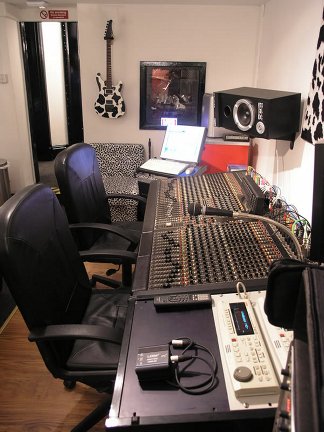
Circulation Sound Studio

Back to

Hillman Musical Odyssey
Hillman Eclectic Studio
 Hillman / UK Connection