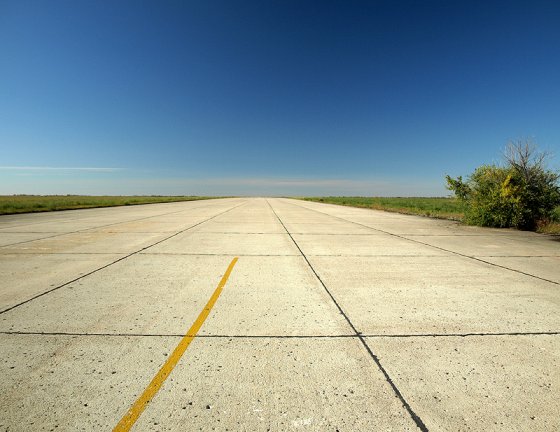
From a distance CFB Rivers does not look any different
than it did in its heyday a half century ago.
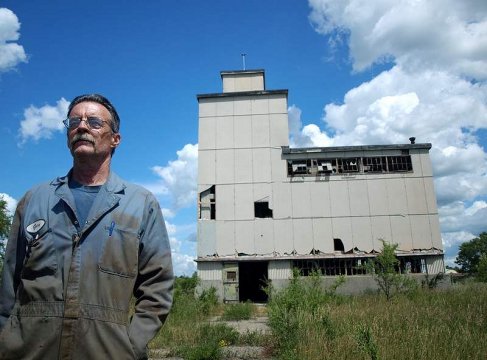 The
towering steam plant that provided heat for the entire base still shimmers
under a hot summer sun. Visitors can make out the old hangers from several
kilometres away. Sometimes small commercial planes can be seen taking off
from the runways.
The
towering steam plant that provided heat for the entire base still shimmers
under a hot summer sun. Visitors can make out the old hangers from several
kilometres away. Sometimes small commercial planes can be seen taking off
from the runways.
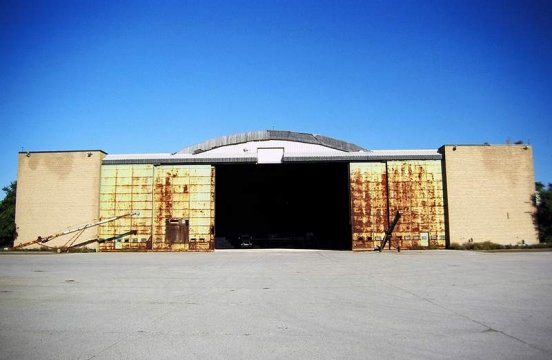
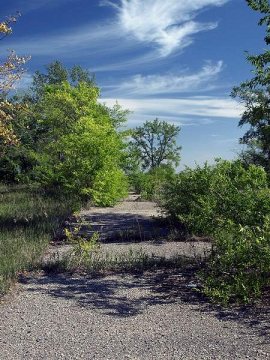
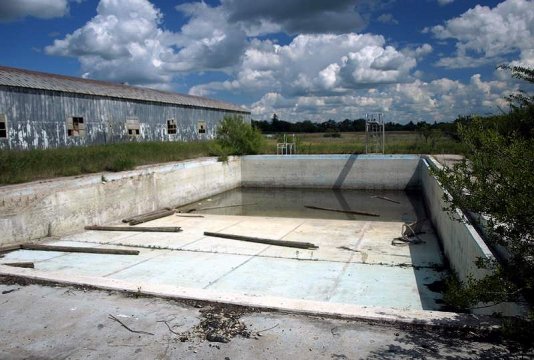
But when visitors arrive at the base gate they are faced
with dereliction and despair. Sadly, this once vibrant Canadian Armed Forces
base on the Manitoba prairie, which sprawls out more than 3,200 acres,
is now a crumbling locale recovering from a recent tragedy, and the scene
of a mysterious haunting that occurred six years ago at the ancient arched
hanger.
In the meantime, while scores and scores of former CFB
Rivers residents marvel at the wonderful memories they retain, many choose
never to return. It is simply too sad, too heartbreaking to see the incredible
state of dereliction of this once proud military community five kilometres
southwest of the Town of Rivers.
“It was such a popular base. Everyone who trained there
loved it. It was a tremendous loss to the surrounding communities when
it was taken away. It was like losing a favourite uncle,” said Bill Hillman,
a 67-year-old career educator and musician from Brandon. Before the base
officially closed in 1971 Bill and
his wife Sue-On performed at numerous shows on the base. Bill also
worked countless hours there as a summer student.
“I had an uncle who trained on helicopters there. It meant
so much. But there is not much remaining there now. It is so sad to see.”
CFB Rivers first opened in 1942 as part of the country's
Second World War commitment to the British Commonwealth Air Training Plan.
The base later became the country's main para-training
centre for army, navy and air force personnel. In 1953, the Basic Helicopter
Training Unit (BHTU) was established and it became the first tri-service
flying training unit in Canada.
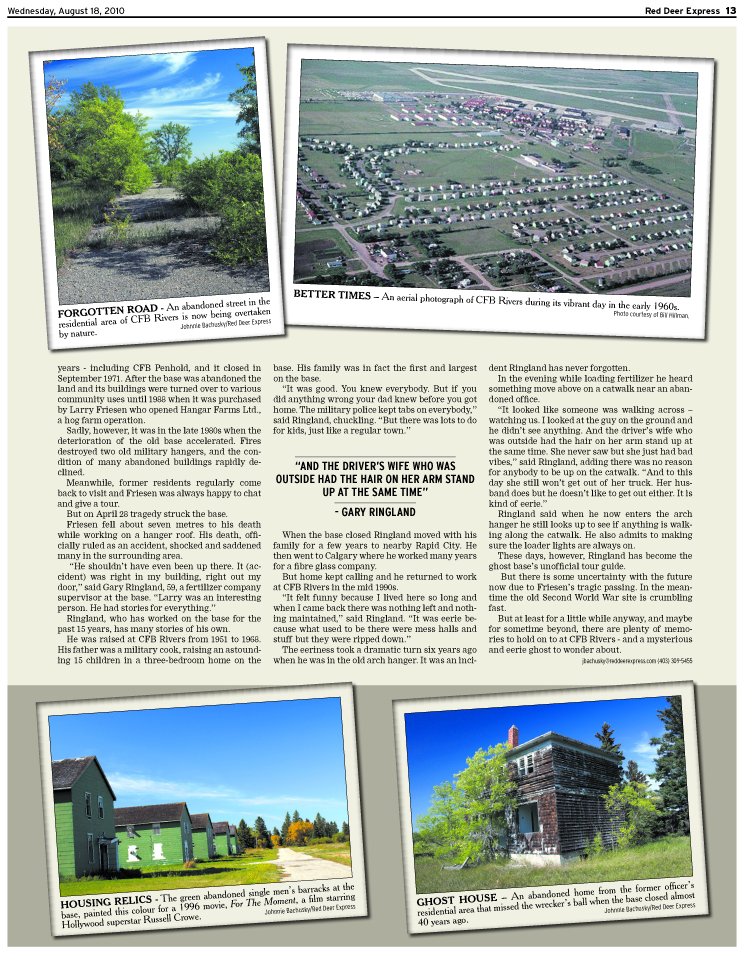
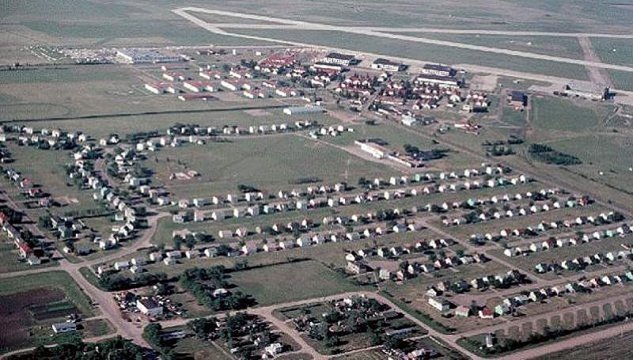
In the meantime, more than 450 homes were constructed
at CFB Rivers for more than 2,000 military citizens. The community boasted
first-class amenities, including a full hospital, dentist, two churches,
a 24-room school, bowling alley, movie theatre, a full grocery store, butcher
shop, auto club, gas station and a recreation centre.
But with the Canadian military unifying in 1968 and Ottawa
making budget cuts, CFB Rivers was declared surplus to defence needs, as
were several other bases across the country in subsequent years - including
CFB Penhold, and it closed in September 1971. After the base was abandoned
the land and its buildings were turned over to various community uses until
1988 when it was purchased by Larry Friesen who opened Hangar Farms Ltd.,
a hog farm operation.
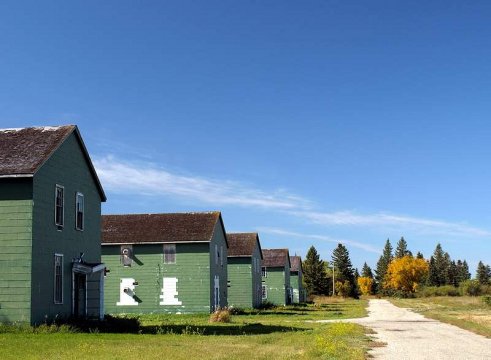
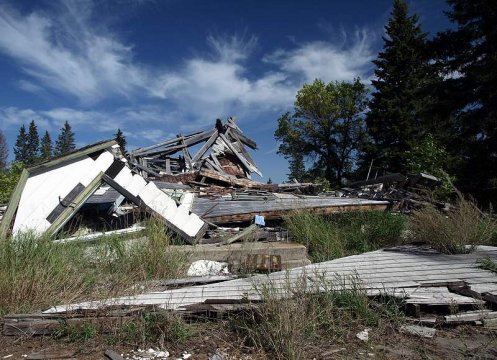
Sadly, however, it was in the late 1980s when the deterioration
of the old base accelerated. Fires destroyed two old military hangers,
and the condition of many abandoned buildings rapidly declined.
Meanwhile, former residents regularly come back to visit
and Friesen was always happy to chat and give a tour.
But on April 28 tragedy struck the base.
Friesen fell about seven metres to his death while working
on a hanger roof. His death, officially ruled as an accident, shocked and
saddened many in the surrounding area.
“He shouldn't have even been up there. It (accident) was
right in my building, right out my door,” said Gary Ringland, 59, a fertilizer
company supervisor at the base. “Larry was an interesting person. He had
stories for everything.”
Ringland, who has worked on the base for the past 15 years,
has many stories of his own.
He was raised at CFB Rivers from 1951 to 1968. His father
was a military cook, raising an astounding 15 children in a three-bedroom
home on the base. His family was in fact the first and largest on the base.
“It was good. You knew everybody. But If you did anything
wrong your dad knew before you got home. The military police kept tabs
on everybody,” said Ringland, chuckling. “But there was lots to do for
kids, just like a regular town.”
When the base closed Ringland moved with his family for
a few years to nearby Rapid City. He then went to Calgary where he worked
many years for a fibre glass company.
But home kept calling and he returned to work at CFB Rivers
in the mid 1990s.
“It felt funny because I lived here so long and when I
came back there was nothing left and nothing maintained,” said Ringland.
“It was eerie because what used to be there were mess halls and stuff but
they were ripped down.”
The eeriness took a dramatic turn six years ago when he
was in the old arch hanger. It was an incident Ringland has never forgotten.
In the evening while loading fertilizer he heard something
move above on a catwalk near an abandoned office.
“It looked like someone was walking across – watching
us. I looked at the guy on the ground and he didn't see anything. And the
driver's wife who was outside had the hair on her arm stand up at the same
time. She never saw but she just had bad vibes,” said Ringland, adding
there was no reason for anybody to be up on the catwalk. “And to this day
she still won't get out of her truck. Her husband does but he doesn't like
to get out either. It is kind of eerie.”
Ringland said when he now enters the arch hanger he still
looks up to see if anything is walking along the catwalk. He also admits
to making sure the loader lights are always on.
These days, however, Ringland has become the ghost base's
unofficial tour guide.
But there is some uncertainty with the future now due
to Friesen's tragic passing. In the meantime the old Second World War site
is crumbling fast.
But at least for a little while anyway, and maybe for
sometime beyond, there are plenty of memories to hold on to at CFB Rivers
- and a mysterious and eerie ghost to wonder about.