 On about December
21st of each year, Aborigines, academics, astroarchaeologists, Atheists,
Celts, Druids, historians, Native Americans, Pagans, Shamans, Wiccans,
Witches, etc., the world over will be celebrating the world's oldest holiday,
the shortest day in the Northern Hemisphere, the Winter Solstice.
On about December
21st of each year, Aborigines, academics, astroarchaeologists, Atheists,
Celts, Druids, historians, Native Americans, Pagans, Shamans, Wiccans,
Witches, etc., the world over will be celebrating the world's oldest holiday,
the shortest day in the Northern Hemisphere, the Winter Solstice.
This year the Solstice in Manitoba officially occurs on December 22
at 12:08 am.
Religious folk worldwide observe many seasonal days of celebration during
the month of December. Most are religious holy days, and are linked in
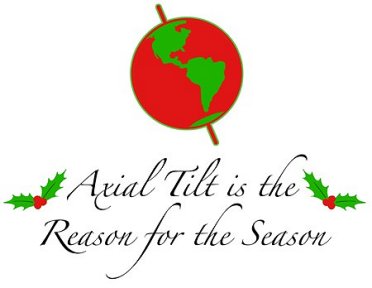
some way to the winter solstice in the Northern Hemisphere. On that day,
due to the earth's tilt on its axis, the daytime hours are at a minimum
in the Northern hemisphere, and night time is at a maximum. To the ancients
the Solstice was the time of the death of the old sun and the birth of
the dark-half of the year.
The event has been celebrated by cultures around the world for many
thousands of years. Originally, many felt that the failing light would
never return unless humans intervened with appropriate ceremony --
fertility rites, fire festivals, music and dancing, and offerings and prayers
to their gods and goddesses. Many of those traditions have been carried
over into present day as well as the lighting and burning of candles, stories
of magical reindeer, decorating with evergreens, holly and ivy, the burning
of evergreens, feasting, generosity and gift giving.
Ancient cultures even built their greatest architectures -- tombs, temples,
cairns and sacred observatories -- so that they aligned with the solstices
and equinoxes. Many of these structures have survived down through the
ages: England's Stonehenge, Ireland's Newgrange, Scotland's Maeshowe --
and a multitude of monuments scattered around the world from Asia and Africa
to the Americas. Even many medieval Catholic churches were built as solar
observatories.
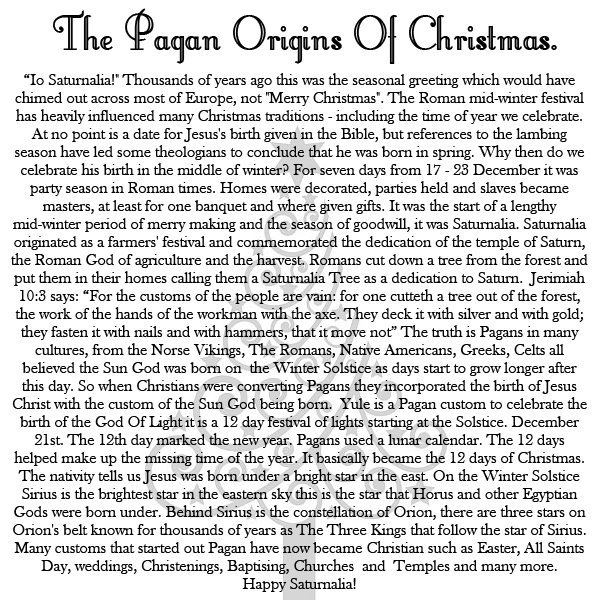
When Christmas was transplanted onto the winter solstice about 1,600
years ago we gradually lost some of the deep connection of our celebrations
to this seasonal hemispheric event, but many of these ancient traditions
are still observed during the time that much of the world celebrates as
a Christian or some other religious holiday.
See
December celebrations in many faiths and locations - ancient
and modern at
THE
RELIGIOUS TOLERANCE SITE
More Web Refs:
Wikipedia
Entry
Quotes from Free Thinkers