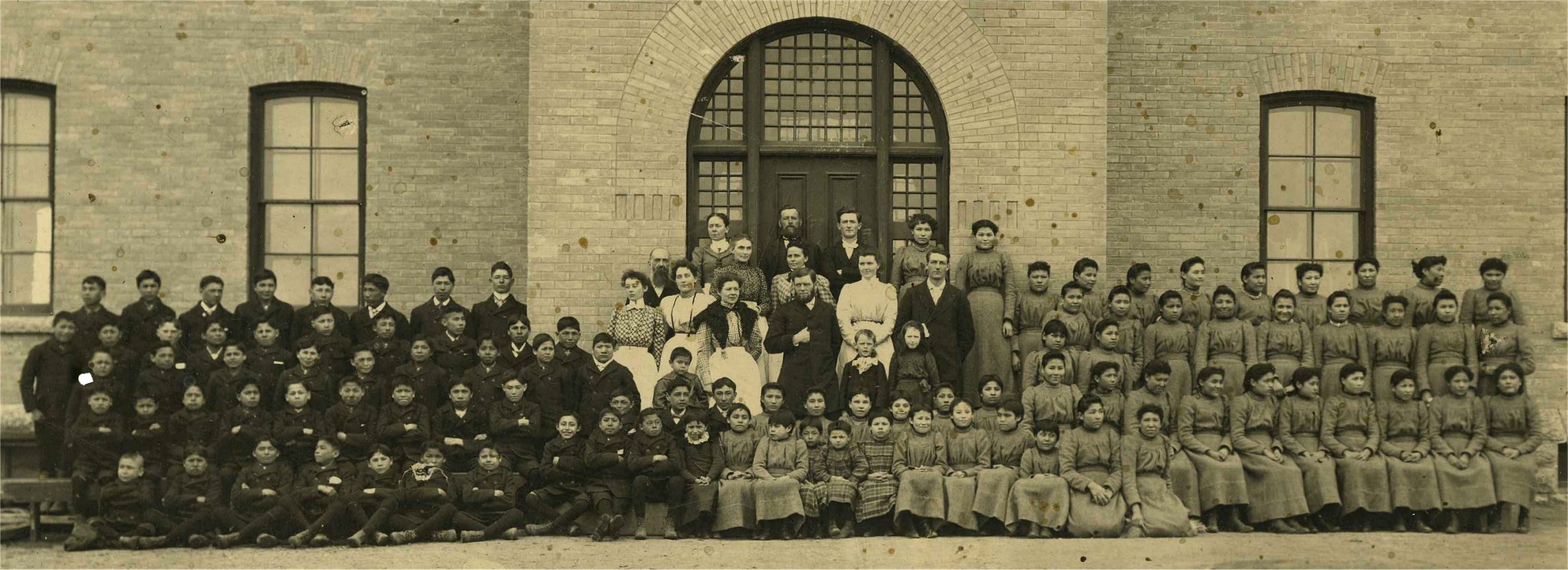
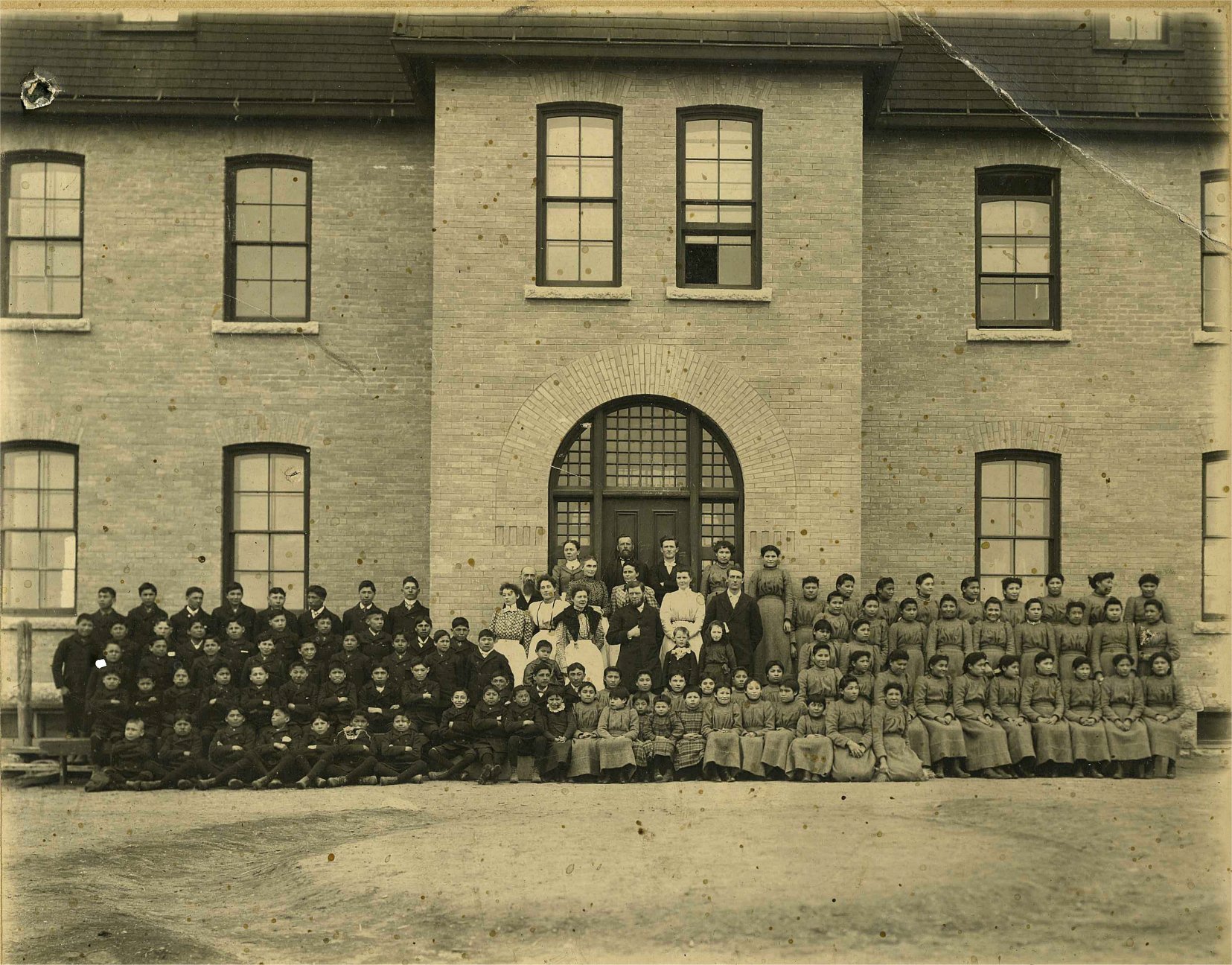
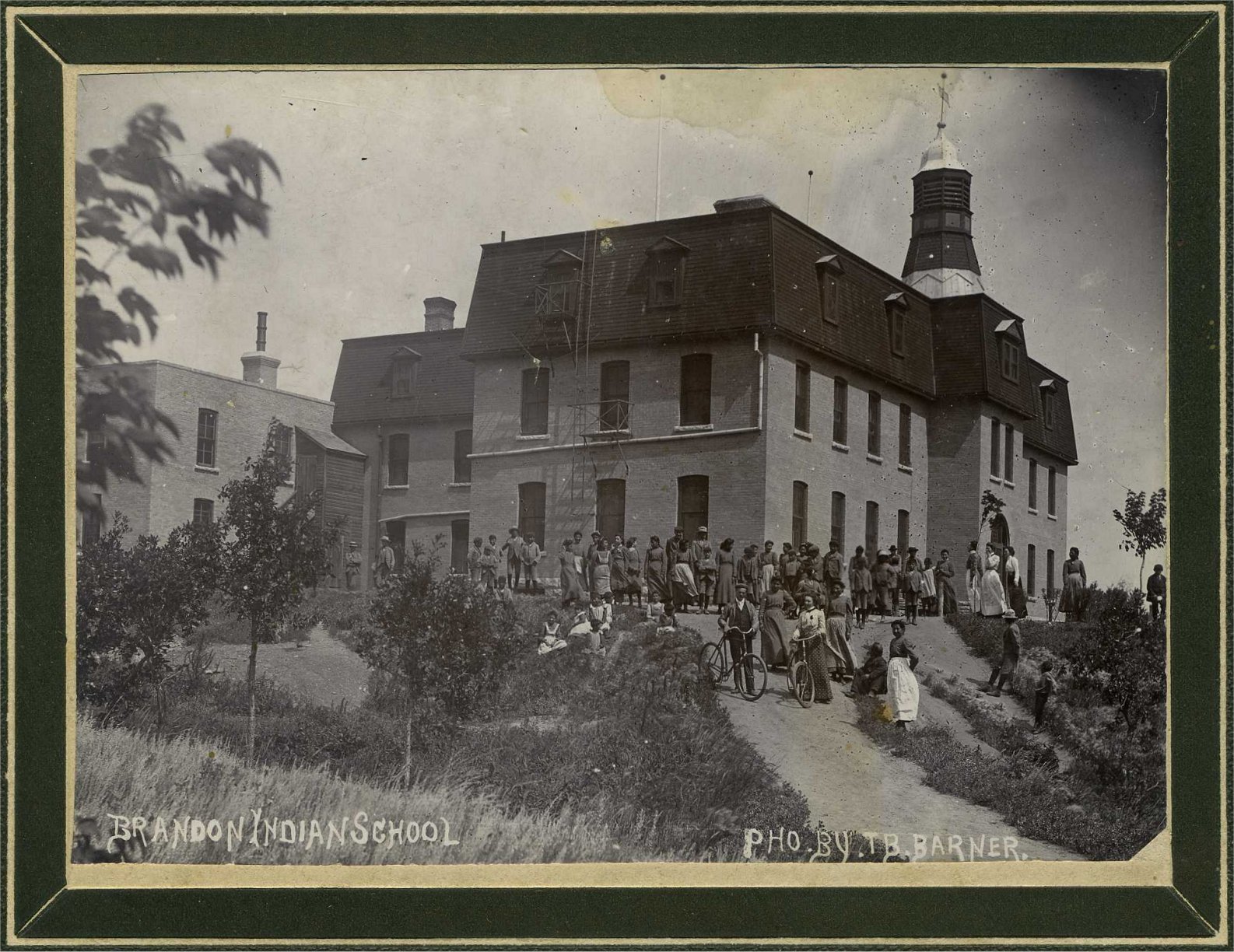
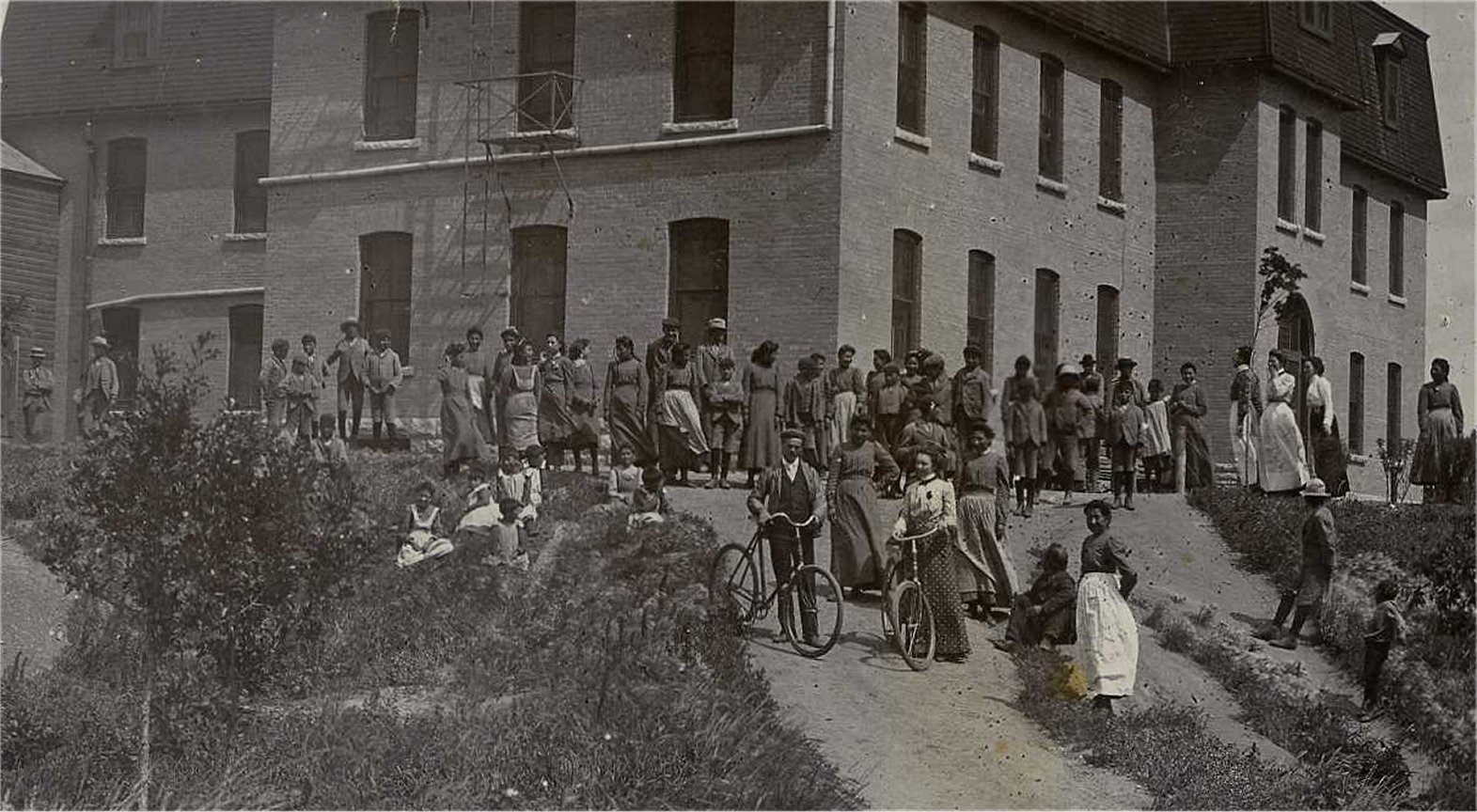
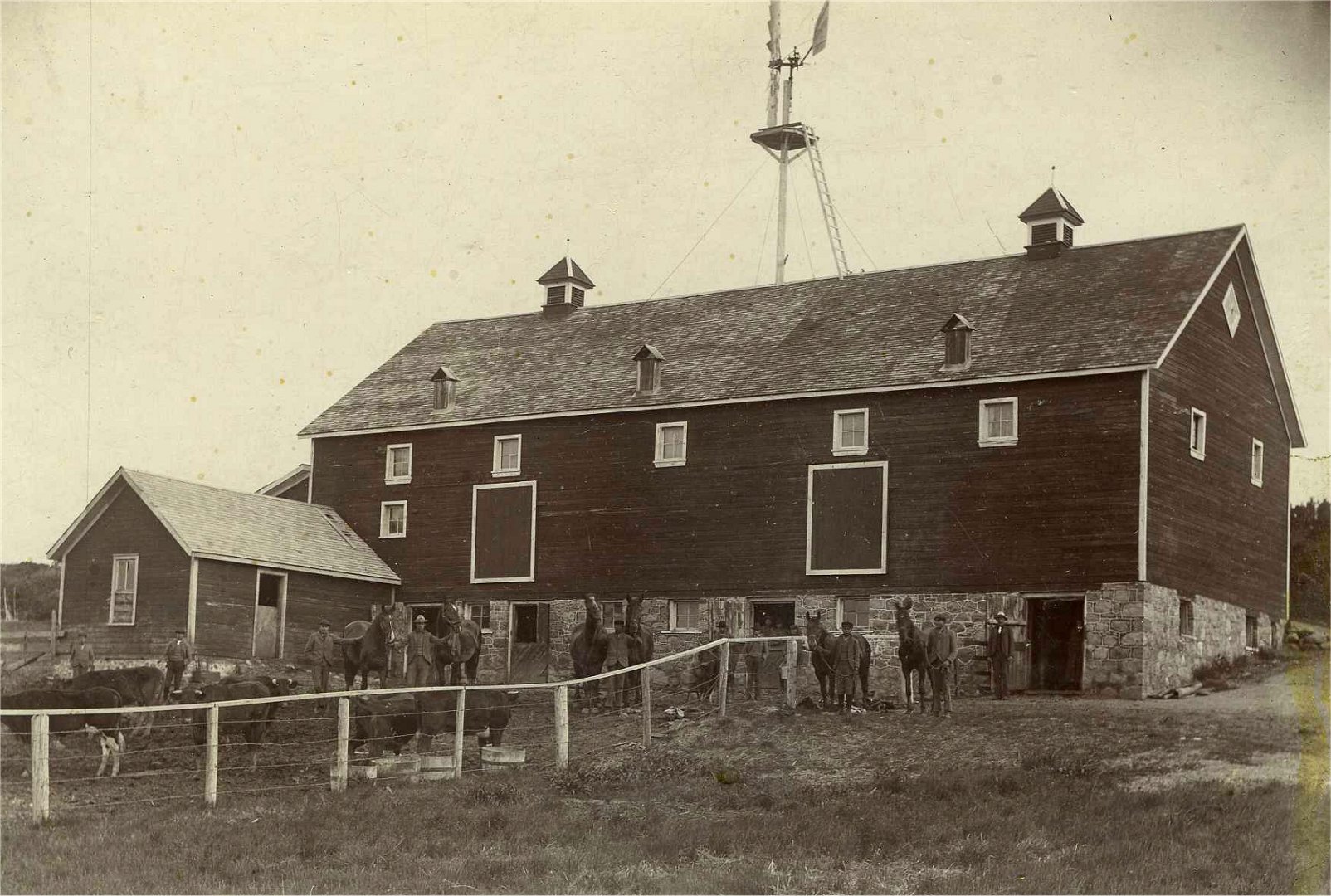
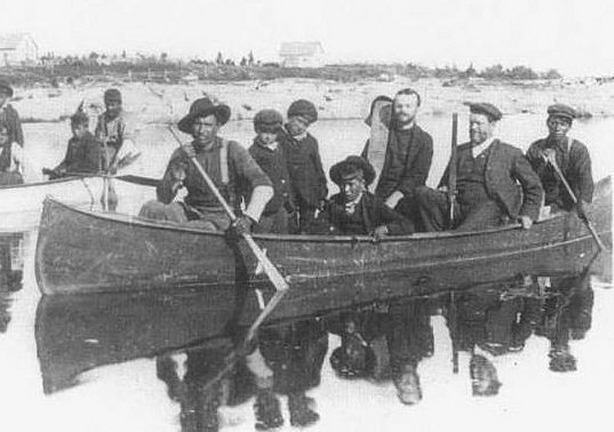
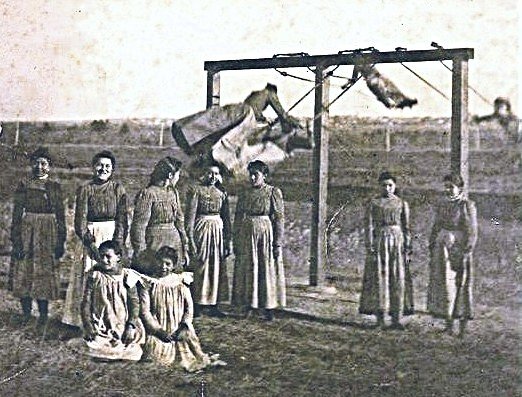
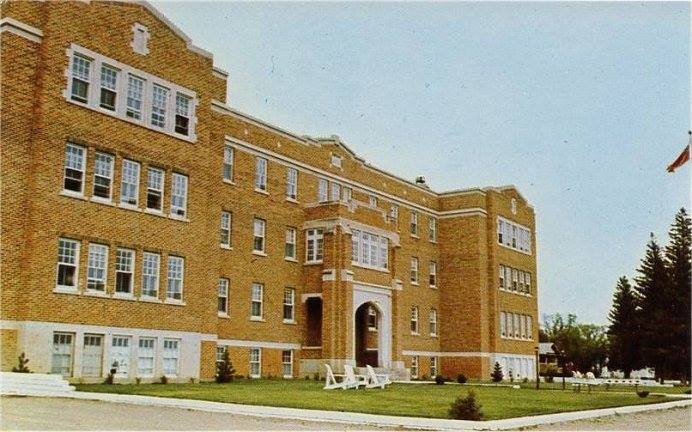
I do not see my grandfather in the group photo
above. He was born in 1867 and I remember him only when he was in his 80s
and I was a child of less than six. I saw him rarely as our family (my
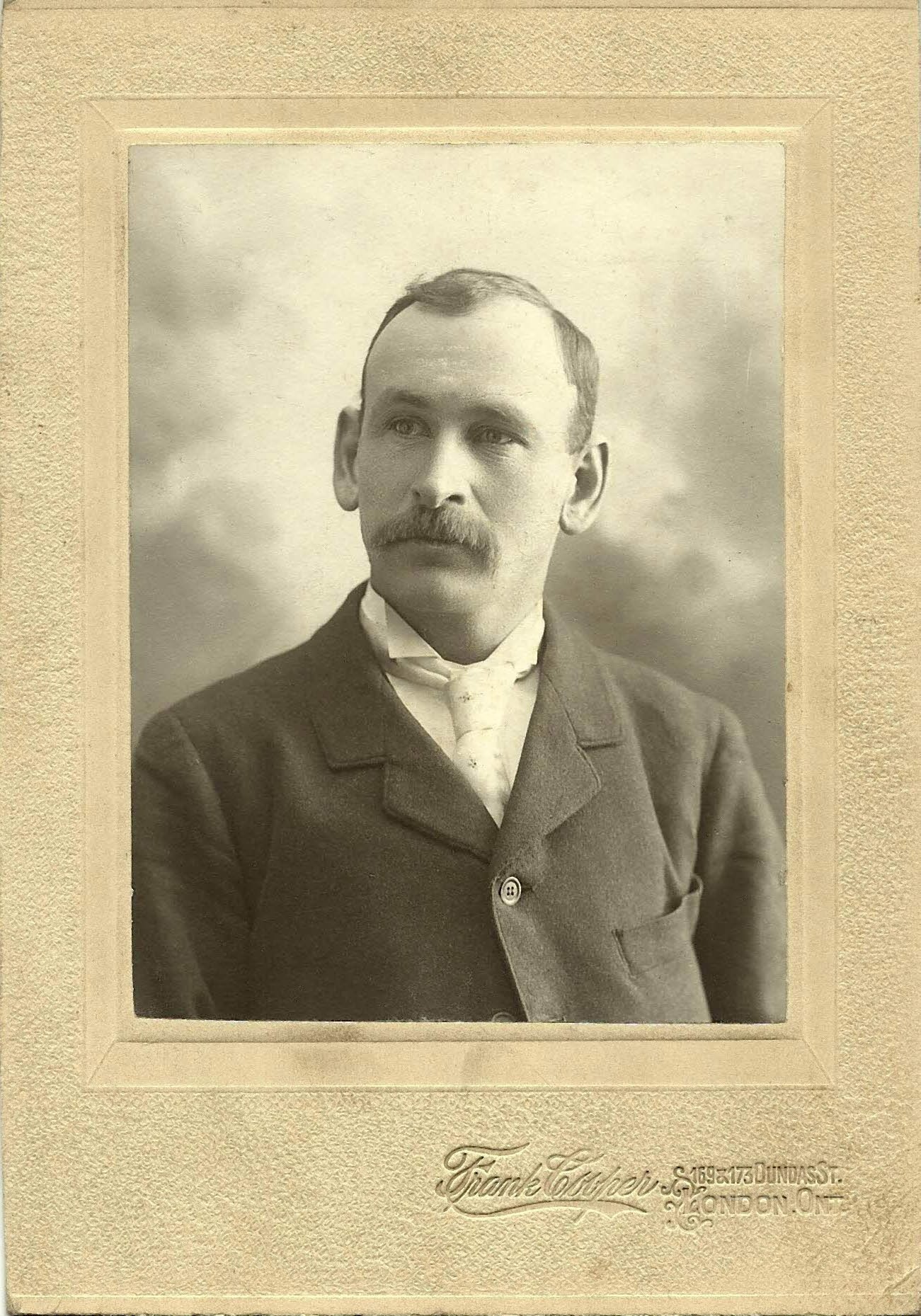
father was son Charles) lived in a different location. I do have a photo
of him, likely taken sometime in the 1890s but am unable to match it (ears,
hairline, trademark moustache) with any of the men in the Brandon School
group photo. My aunt's research indicates he was definitely on staff at
that time, and it probably doesn't matter whether he is in the photo. What
is
important is that the photo is in pretty good shape for being more than
110 years old and should prove interesting to other generations.
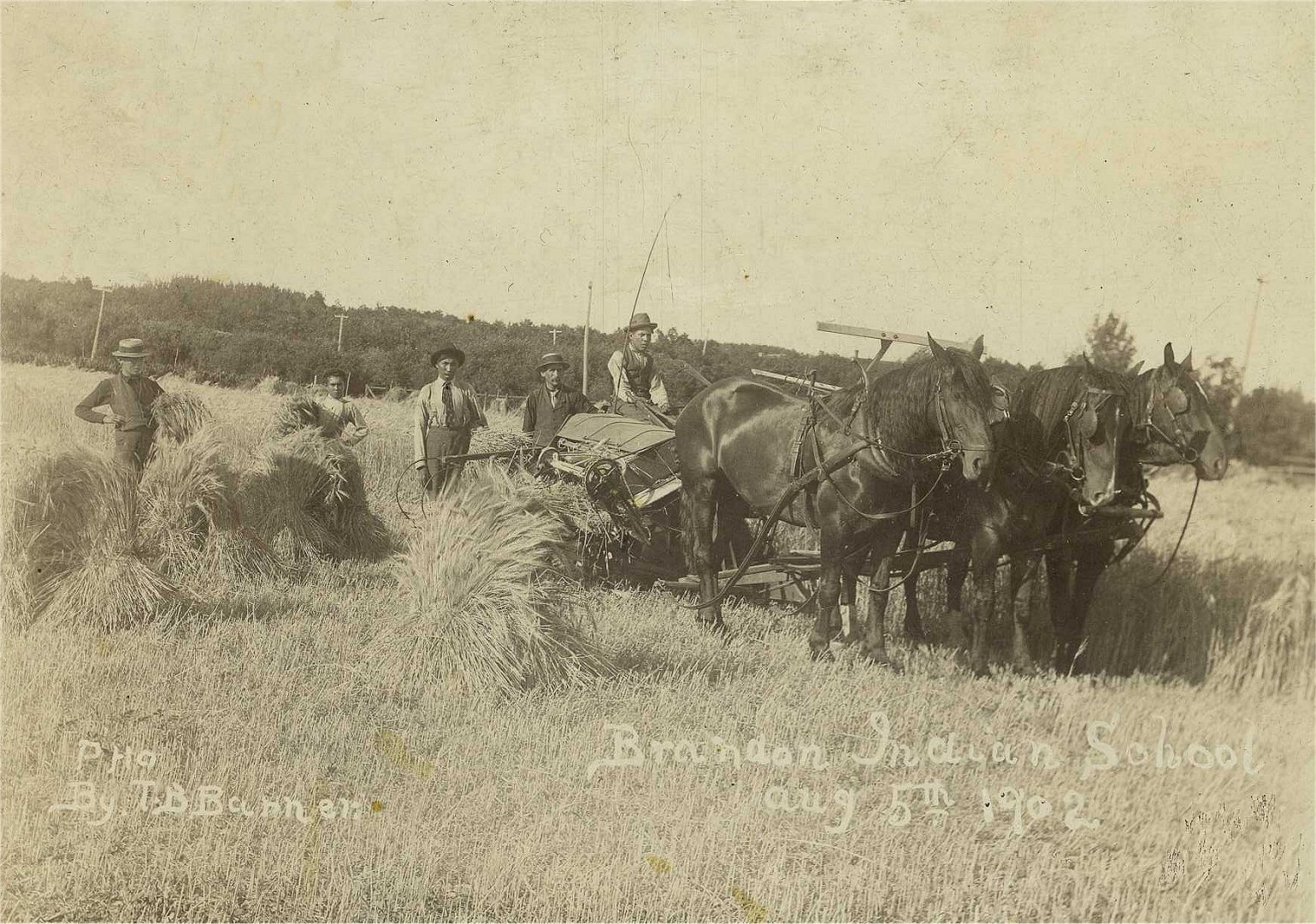
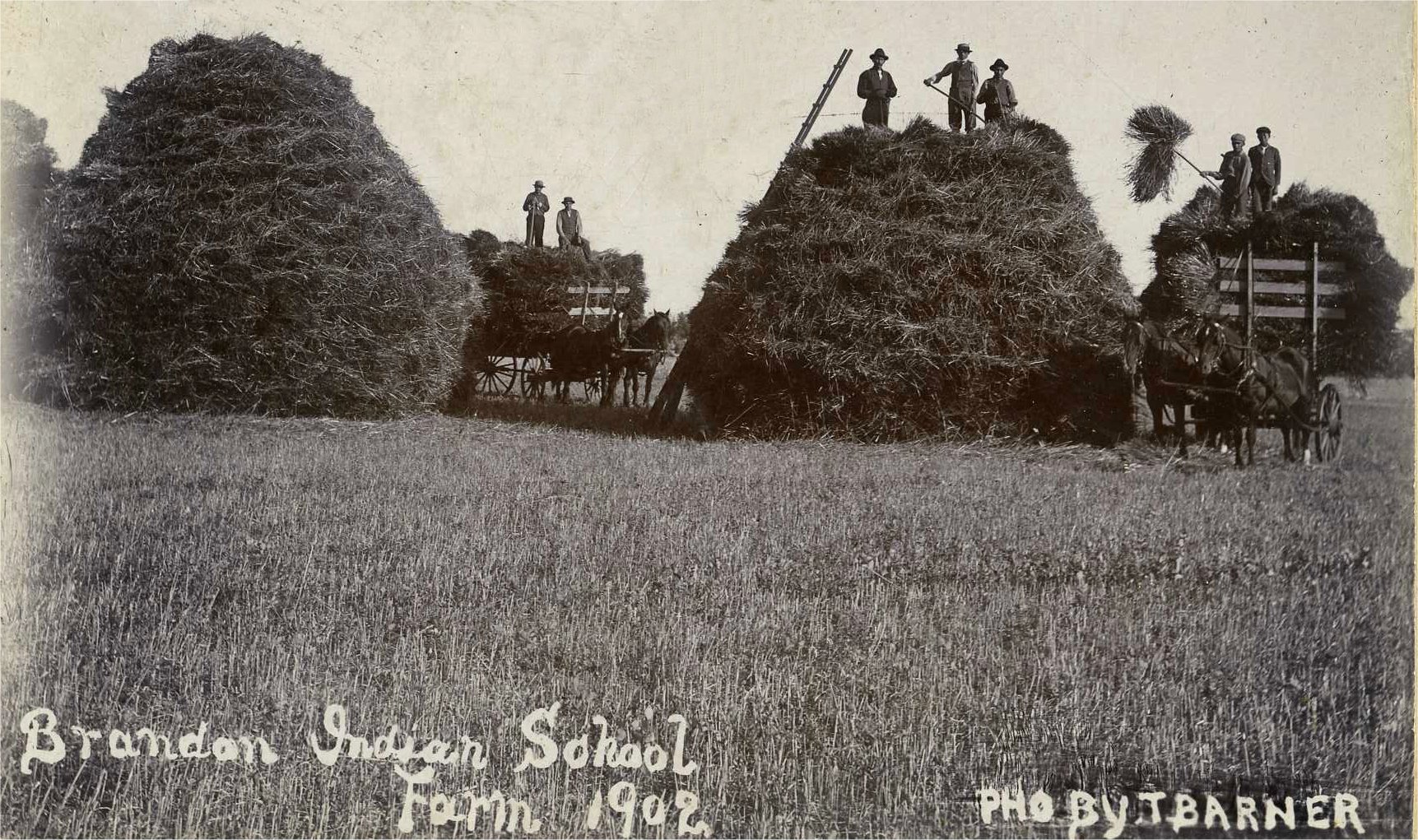
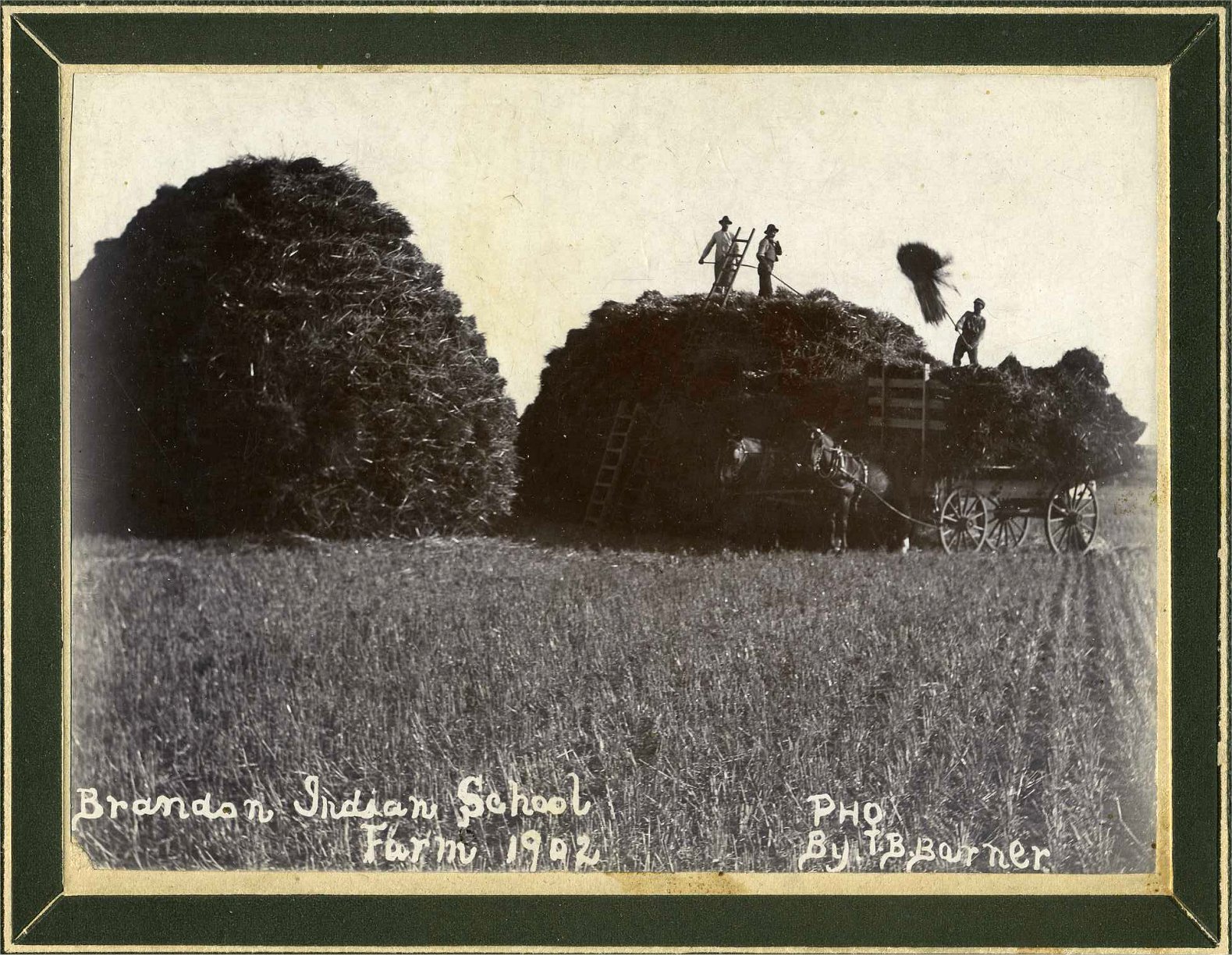
Writing on the back of one of the photos suggests that
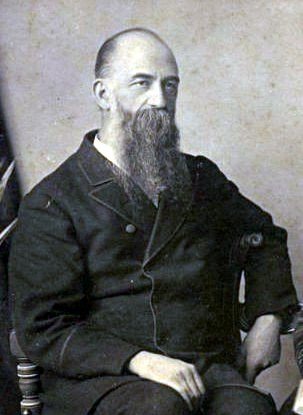
T. B. Barner, the photographer, was on staff at the school. (Addendum:
A woman in Saskatchewan, a great-great grand-daughter of T. B. Barner,
contacted me after seeing this page and, in her words, “The balding staff
member with the long impressive beard on the left of the staff group is
T. B. Barner, the man who took some of the other photos. The photo is likely
to have been taken before November 1902 (approx) since T. B. Barner had
moved to Saskatchewan by then.)
*UPDATE:
A great-great grandson of T. B. Barner contacted me
after seeing this page and sent me a group photo of staff and students
at the Brandon Industrial School (below). My grandfather
is at the far left in the back row.
The miniature here comes from that photo. (courtesy
of Larry Harris, Houston, TX)
I feel that the photos are of historical significance
because they show a rich and ancient culture in the process of becoming
"civilized" to adhere to European standards. I suppose at the time the
powers-that-be
thought they were doing the right thing. I found a quote on another site
that reflects my view (albeit from a much later perspective) and I'd like
to share it.
"Why should we expect that Indians alone, of all people,
should be quietly ready to give up all old customs and traditions and language,
and adopt those of the aggressor on their soil? The change which we expect
the Indian to make, and make so quickly, is a far greater one than is required
of any of those nations above enumerated [Germany, Sweden, France, Italy],
who have left the shores of one civilized country to come to those of another.With
the Indian, the change is a radical one—a change of dress, a change
of dwelling, a change in mode of gaining livelihood, a social change, a
religious change, an educational change a totum in toto change.
And this—not so much for his own benefit, as for our own convenience. We
want the land. We cannot have Indian hunters annoying our farmers and settlers.
If the Indian is to remain, we expect him to be a decent neighbour; and
to be a decent neighbour, we expect him to accept our religion, our education,
our laws, and our customs. We allow him no choice and we allow him no time."
(Attributed to E.F. Wilson, Principal of Shingwauk
Residential School. May 1891. The Canadian Indian. Vol. 1, No. 8)
(from site: Regina Indian Industrial School)
Both the Brandon and the Regina schools were Indian Residential Schools,
two among so many being given negative attention for much of this century. I am
assured by Milne Family research that Grandfather James was a very tolerant and
hard-working individual with a fine sense of humour and an open mind. He would
have focused only on working hard, teaching his students useful skills, would
not have imposed his beliefs on them nor attempted to extinguish their
indigenous cultures. The combined job of farmer and farming instructor required
a lot of hard work: planting and harvesting crops, taking care of horses,
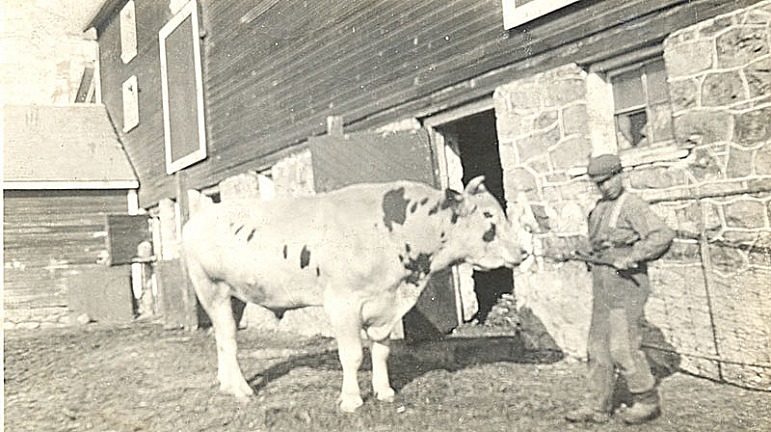
milking cows, feeding chickens, collecting eggs and teaching the male students how to perform these tasks. His goal was to
establish a homestead in Alberta, which he did after working hard for many
years, including for two residential schools.